


As students, educators, and members of the workforce, we typically assign broad categories to our professional interests. STEM fields, for example, are those related to science, technology, engineering, and mathematics. Similarly, we assign a broad label, the humanities, to fields such as literature, philosophy, art, law, politics, and religion. While these categories are useful in creating educational curricula, compiling job requirements, and networking, they often create artificial barriers between different fields and ignore interdisciplinary collaboration. As a student, I’ve regularly seen peers limit themselves by ignoring subjects outside the general vicinity of their perceived academic interests — assuming that those subjects will have no benefit to their future careers.
In reality, interdisciplinary collaboration occurs frequently and is, in fact, vital across academia and the majority of the world’s industries. Unaware of this simple fact, much of my time as an undergraduate was characterized by confusion — I’m passionate about writing, story-telling, and communication, but I want to pursue a career in healthcare. When it came to my career, would I really have to leave one of my interests behind in favor of the other? Thankfully, with the help of a few of my English professors, I quickly found an answer: narrative medicine.
What is Narrative Medicine?
Narrative medicine — part of a wider range of medical humanities disciplines — seeks to fortify clinical practice by assigning patients’ unique stories as a top priority in medical care.[1]Zaharias G. What is narrative-based medicine? Narrative-based medicine 1. Can Fam Physician. 2018;64(3):176‐180. Because no single, definitive method exists to practice such an approach, narrative medicine has been interpreted differently by individuals in the field. Dr. Rita Charon — founder of Columbia University’s Narrative Medicine Program and one the pioneers of the discipline — describes narrative medicine as medicine practiced with the narrative competence to “acknowledge, absorb, interpret, and act on the stories and plights of others.[2]Charon R. Narrative Medicine: A Model for Empathy, Reflection, Profession, and Trust. JAMA.2001;286(15):1897–1902. doi:10.1001/jama.286.15.1897 A physician may be expertly trained in diagnosing and treating disease, but lack the capability to effectively extend empathy towards a suffering patient. This inadequacy in the typical biomedical model led to narrative medicine, which has grow rapidly since Columbia University’s program was inaugurated in 2000.[3]https://sps.columbia.edu/academics/masters/narrative-medicine
Along with scientific ability, physicians need the ability to listen to the narratives of the patient, grasp and honor their meanings, and be moved to act on the patient’s behalf.
Dr. Rita Charon, MD, PhD
As narrative medicine attempts to repair the sense of disconnect felt by many in the patient-provider relationship, “four divides”[4]Zaharias G. What is narrative-based medicine? Narrative-based medicine 1. Can Fam Physician. 2018;64(3):176‐180. have been identified that the discipline hopes to address:
- Relation to mortality – Because of their medical training, physicians carry a different perspective toward illness than their patients, whose attitudes may be shaped by prior experience. Patients are likely to feel misunderstood when their fears are not approached with care.
- Context of the illness – Physicians may view disease as a biological occurrence, while patients will approach illness within the context of their lives — concerned with how their lifestyles, relationships, hobbies, and occupations might be affected.
- Beliefs about causality – Physicians are equipped with medical knowledge that patients may lack. When a patient’s notions regarding his/her/their illness conflict with their physician’s, the quality of care may be affected.
- Shame, blame, and fear – Emotions on both sides of the patient-provider relationship can cause added, unnecessary strain to the experience of illness. Patients may feel vulnerable while ill and feel embarrassed to share personal details. They may feel guilty of past decisions or blame their physicians for “inadequate” care. Similarly, physicians may grow frustrated and want to blame their patients for not cooperating or treating their bodies poorly.
For Dr. Charon and other practitioners of narrative medicine, these barriers can be alleviated by recognizing their existence, and then listening closely to the patient and acknowledging their concerns and emotions.
Building a Better Provider
So how exactly does narrative medicine instill values such as empathy, curiosity, caution, and articulation (qualities that ultimately make one a better listener and break down the “four divides”) within healthcare providers?
Through a number of practices seen regularly in humanities fields and, in particular, literature!
Students and educators of narrative medicine regularly consume a variety of media — novels, non-fiction works, poetry, art, film, and research articles. In doing so, they regularly practice close reading skills much like a student in an English department. Critical analysis encourages one to practice patience, ask questions, and try and build connections with that which they may not entirely understand. Dr. George Zaharias explains that patients’ stories can often be compared to literary text: “[S]ome patient stories are straightforward […] Others, however, are […] told in a particular way that requires more background information, further exploration, and someone more expert to assist with the interpretation. Reading of literary texts stimulates the imagination […] and text analysis promotes a deeper understanding of the narrative.”[5]Zaharias G. What is narrative-based medicine? Narrative-based medicine 1. Can Fam Physician. 2018;64(3):176‐180. By applying these same skills during clinical encounters, physicians may able to learn and understand much more about the patients they are treating.
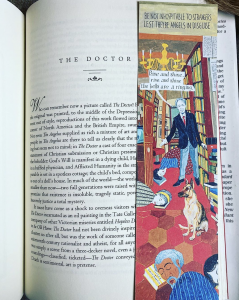
Close reading, however, is not the only practice that narrative medicine borrows from the humanities. Those practicing narrative medicine are encouraged to regularly write and workshop with peers. While close reading encourages a better understanding of the patient, writing and peer-workshops encourage reflection; ultimately, this helps lead healthcare providers to a better understanding of themselves. In the medical field, which often brings a great deal of stress for both professionals and students, writing provides an outlet where one can unpack their fears and dispel biases.[6]https://www.aamc.org/news-insights/narrative-medicine-every-patient-has-story Dr. Susan Palwick, a professor of English and adjunct professor at the University of Nevada, Reno Office of Medical Education, for example, explained that one of her students wrote a series of vignettes to better understand why some patients struggle with their weight and require surgery.[7]https://www.aamc.org/news-insights/narrative-medicine-every-patient-has-story Similarly, one student shared an experience in which writing poetry helped them reflect on a difficult day in a psychiatric rotation — ultimately turning it from a bad memory into a learning experience.[8]https://www.aamc.org/news-insights/narrative-medicine-every-patient-has-story
Finally, a likely side-effect of all of the reading and writing: a healthcare provider who is much more likely to articulate himself in a manner that his/her/their patient can easily understand. Healthcare workers spend many long days in school learning about disease and physiology from a medical standpoint. While this is absolutely necessary, they often struggle, as clinicians, to explain medical jargon to those they are treating — contributing to feelings of disconnect in the patient-provider relationship. By pausing and thinking about the patient’s perspective, healthcare workers become more conscious of their speech and can likely help their patients better understand their illnesses.[9]https://www.youtube.com/watch?v=07tgLu4kWQw
Next Steps
For those who are interested in narrative medicine and the intersection between medical care and the humanities, a number of resources and educational courses are available:
- Literature
- Educational Courses
- Columbia University – Master of Science in Narrative Medicine
- Columbia University – Certificate of Professional Achievement in Narrative Medicine
- Columbia University – Narrative Medicine Workshops
- University of Southern California – Master of Science in Narrative Medicine
- Lenoir Rhyne University – Graduate Certificate in Narrative Healthcare
- Emory Continuing Education – Narrative Medicine: Using Writing to Heal
- Other Medical Humanities Programs
- For those pursuing medical school, a large number of United States medical schools have implemented medical humanities into their curriculum in some form.
Feel free to also check out my references (located below) which feature a couple of fantastic, concise journal articles that are available to access at no cost.
Since finding out about medical humanities, and, in particular, narrative medicine, I’ve had the opportunity to reflect on my own personal experiences. As both a writer and a volunteer in clinical settings, I’ve realized that medicine and the humanities share a commitment to the same core values: compassion, curiosity, and understanding. While I once thought that a humanities background would be largely incompatible with a career in STEM, I now understand that the skills I have attained thus far from regular close reading, writing, and reflection will certainly be beneficial for me as a future physician. It is empowering to know that story-telling is being recognized as a beneficial tool for the advancement of health and wellness. Literary critic R.W.B. Lewis writes, “Narrative deals with experiences, not with propositions.”[10]Lewis RWB. The American Adam: Innocence, Tragedy and Tradition in the Nineteenth Century. Chicago, Ill: University of Chicago Press; 1955:3. To me, this quote — only seven words long — perfectly explains why narrative can be such a powerful force. I’ll be leaving you with it to think about.
Take Care,
Muhammad
SHARE:
References
| ↑1, ↑4, ↑5 | Zaharias G. What is narrative-based medicine? Narrative-based medicine 1. Can Fam Physician. 2018;64(3):176‐180. |
|---|---|
| ↑2 | Charon R. Narrative Medicine: A Model for Empathy, Reflection, Profession, and Trust. JAMA.2001;286(15):1897–1902. doi:10.1001/jama.286.15.1897 |
| ↑3 | https://sps.columbia.edu/academics/masters/narrative-medicine |
| ↑6, ↑7, ↑8 | https://www.aamc.org/news-insights/narrative-medicine-every-patient-has-story |
| ↑9 | https://www.youtube.com/watch?v=07tgLu4kWQw |
| ↑10 | Lewis RWB. The American Adam: Innocence, Tragedy and Tradition in the Nineteenth Century. Chicago, Ill: University of Chicago Press; 1955:3. |

Great article! A lesson to us is that there is always a promising future for someone who pursues something that they are passionate about. Not sure if that was a good sentence.